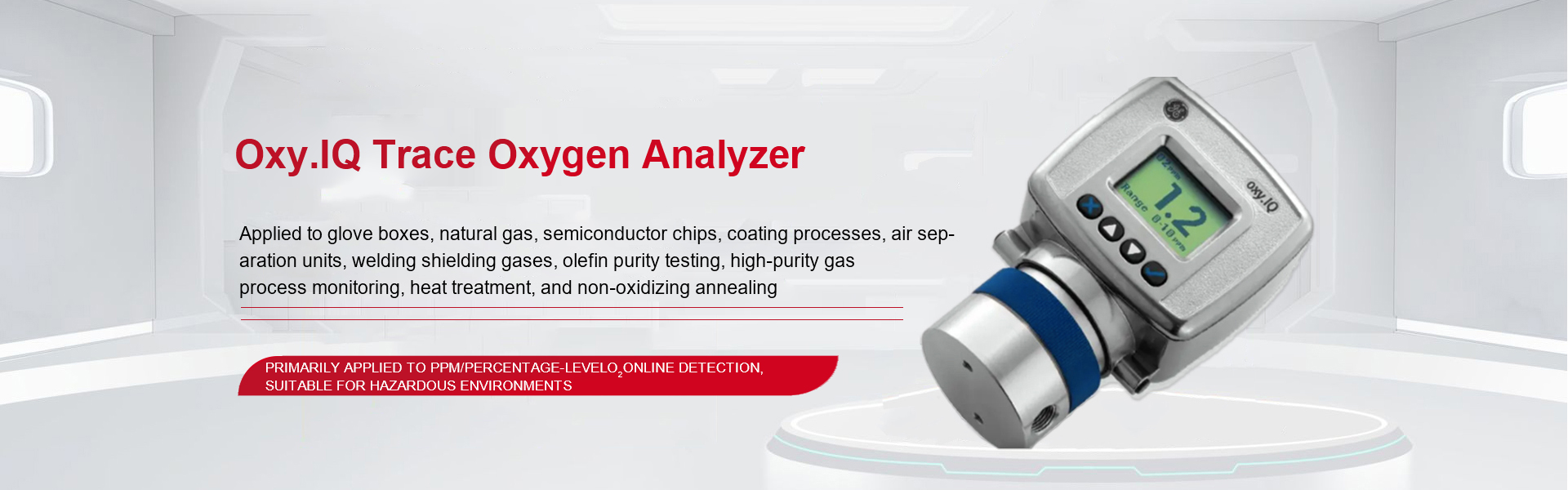
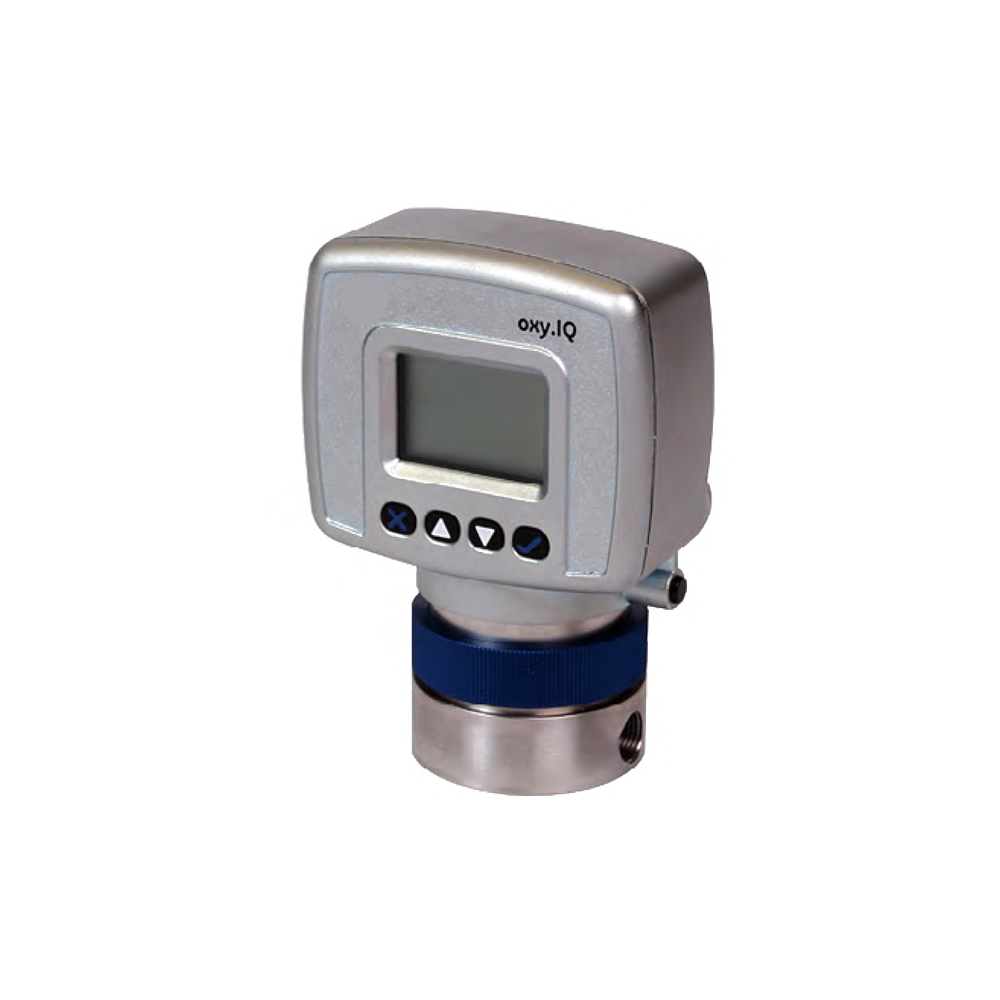
The OXY.IQ is a compact, easy-to-maintain two-wire loop-powered transmitter equipped with field-proven galvanic fuel cell sensors. Compared with conventional oxygen analyzers, it delivers superior anti-interference performance, stability and lower maintenance costs. Its key specifications and features are listed below:
| Category | Specifications | Remarks |
|---|
| Measurement Performance | 1. Measuring Ranges: User-selectable• 10 ppm ranges: 0~10, 20, 50, 100, 200, 500, 1000, 2000, 5000, 10000 ppmv• 8 percentage ranges: 0~1%, 2%, 5%, 10%, 21%, 25%, 50%, 100%2. Sensor Technology: Galvanic fuel cell3. Accuracy: ±1% FS (at calibration points); ±2% FS for 0~10 ppmv range4. Resolution: ±0.1% FS5. Response: Fast and stable recovery from low ppm levels to ambient air within minutes | Suitable for trace to standard oxygen measurement. Strong anti-interference against most background gases and hydrocarbons. No electrolyte replacement or electrode cleaning required. Innovative sensor design eliminates potential negative signal output and reduces contamination risks. |
| Power & Output | 1. Power Supply: Two-wire loop power• Div 2 / General installation: 9~28 VDC (Max. 0.7 W)• Intrinsically Safe installation: 24~28 VDC (50 mA)2. Output: Linear 4~20 mA; 23 mA fault output for sensor failure; NAMUR-compliant fault indication3. Interface: Integrated keypad & display with built-in diagnostic functions | Simple wiring. Direct connection to DCS/PLC for centralized monitoring. Early warning of equipment anomalies to reduce operational risks. |
| Safety & Protection | 1. Explosion Protection: Intrinsically Safe (pending certification), Flameproof Div 2; compliant with ATEX/IECEx, US and Canadian standards for classified hazardous areas2. Enclosure Rating: IP66, Type 4X (waterproof & corrosion-resistant)3. Wetted Materials: 316 stainless steel process assembly, Viton® O-rings, gold-plated sensor contacts and glass | For Intrinsically Safe installation, use MTL7706 Zener barrier and IS cables. Suitable for Zone 0/1 explosive hazardous areas and harsh industrial conditions. |
| Installation & Maintenance | 1. Process Connection: 1/8” NPT-F inlet & outlet2. Sample Flow: Recommended flow rate: 1.0 SCFH (500 cc/min); vent to atmospheric pressure during operation and calibration3. Maintenance: Low-maintenance design; no electrolyte or electrode cleaning needed; sensor life indication available4. Dimensions & Weight: 4.10 in × 2.75 in × 2.05 in, 1.35 lb (612 g) | Compact size for easy installation. Low maintenance downtime. Ideal for continuous on-line monitoring, OEM and system integration. |
2. Key Industries & Application Scenarios
With flexible ranging, high reliability and full hazardous area compliance, the OXY.IQ is widely used in oil & gas, chemical, semiconductor, metallurgy, new energy and other industries.
2.1 Oil & Gas Industry
Oxygen monitoring in oil and gas operations focuses on risk prevention and process stability. The OXY.IQ covers the full workflow of gas treatment, transmission and refining.
• Natural Gas Processing & Transmission: Monitor oxygen in dehydrated natural gas and inert blanketing gas to prevent explosion risks and pipeline internal corrosion. Applicable to oxygen measurement in pure hydrocarbon gas streams.
• CNG / LNG Production & Storage: Measure oxygen in feed gas and finished gas at CNG stations and LNG plants to avoid explosion hazards and guarantee product purity during storage and transportation.
• Refining Processes: Track oxygen levels in process gas and recycle gas for fluid catalytic cracking, hydrotreating and other units, preventing catalyst deactivation, equipment corrosion and safety incidents.
2.2 Chemical Industry
Precise oxygen control ensures reaction efficiency, product quality and operational safety in chemical processes.
• Oxidation & Reduction Reactions: Real-time oxygen monitoring in reactors for automatic gas flow regulation, optimizing reaction conversion rate and selectivity while minimizing safety risks. Ideal for vapor monomer and polymerization process monitoring.
• Inert Gas Blanketing: Detect oxygen in nitrogen, argon and other blanketing gases for PE, PP, PET polymerization and coating processes, preventing product oxidation, discoloration and performance degradation, and protecting catalyst activity.
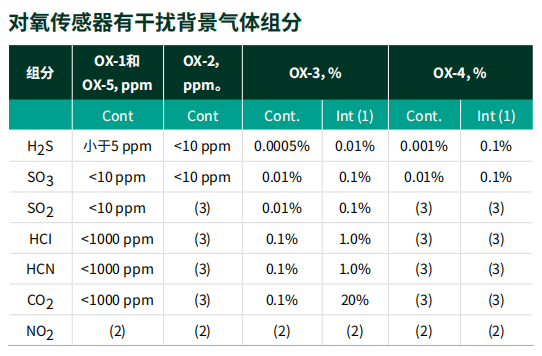
• Acidic Gas Applications: OX-2 and OX-4 sensors are compatible with acidic process gases to expand application coverage.
2.3 Semiconductor & Electronics Industry
Semiconductor manufacturing requires ultra-high gas purity. Trace oxygen causes wafer oxidation and lower yield, where the OXY.IQ’s high-precision ppm-level measurement delivers optimal performance.
• Wafer Fabrication: Monitor trace oxygen in inert blanketing gas (nitrogen, argon) for wafer processing and packaging equipment to avoid surface oxidation and ensure chip quality.
• Electronic Grade Gas Analysis: Measure trace oxygen in high-purity nitrogen, argon, silane and other specialty gases to meet strict purity specifications for semiconductor processes.
2.4 Other Major Applications
• Metallurgy & Heat Treatment: Control oxygen in protective gas for metal bright annealing and thermal treatment to prevent oxidation and decarburization, and preserve mechanical properties. Also used for shielding gas monitoring in welding applications.
• Membrane Air Separation: Analyze oxygen and nitrogen product gas purity to optimize separation efficiency and gas recovery rate.
• Glove Box Purification: Real-time oxygen monitoring and leak detection for glove boxes, maintaining stable inert environments for laboratories and pilot chemical tests.
3. Selection Guidelines, Installation & Maintenance Recommendations
3.1 Key Selection Guidelines
Match the analyzer to on-site working conditions with the following four core points:
1. Range Matching: Select ppm or percentage ranges according to actual oxygen concentration. Choose 0~10/20 ppmv for semiconductor applications and 0~21% for general industrial blanketing.
2. Hazardous Area Classification: Select Intrinsically Safe version with Zener barrier and IS cables for Zone 0/1; choose Flameproof Div 2 version for Zone 2 to comply with local safety regulations.
3. Sensor Selection: Use OX-2 / OX-4 sensors for acidic gas media; select OX-1, OX-3 or OX-5 for conventional gases to avoid sensor corrosion and performance degradation.
4. Output & Installation: The standard 4~20 mA output meets basic monitoring needs; connect to DCS/PLC for remote monitoring and fault alarm. Verify equipment dimensions and cable length based on installation space.
3.2 Installation & Maintenance Guidelines
1. Installation Requirements: Keep away from vibration sources and electromagnetic interference (frequency converters, high-voltage lines). Ensure tight sealing for 1/8” NPT-F connections. Maintain a stable sample flow of 1.0 SCFH (500 cc/min). Follow standard wiring with MTL7706 Zener barrier and IS cables for Intrinsically Safe installations.
2. Sample Conditioning: Equip with pre-treatment systems (≤80 μm filtration, dehumidification, temperature control) for dusty, oily or high-humidity media to protect sensor membranes and electrodes. Vent samples to atmospheric pressure during calibration and operation.
3. Calibration & Routine Maintenance: Perform calibration every 3 to 6 months using high-precision standard gas (tolerance within ±0.1%). Follow the sequence: zero calibration first, then span calibration. Replace aged sensors timely via the built-in service life indicator (typical sensor service life: 3 years). Regularly inspect tubing and connections; no routine electrolyte replacement or electrode cleaning is required.
4. Typical Application Cases & Results
The OXY.IQ has been widely deployed globally, with its high reliability and low maintenance fully proven in field operations.
Case 1: Oxygen Monitoring for Chemical Reactor
• Requirements: Real-time oxygen monitoring (0~5% range) for oxidation reactors in a large chemical plant located in Zone 1 hazardous area; prevent explosion and low reaction efficiency caused by abnormal oxygen levels.
• Solution: PANAMETRICS OXY.IQ (Intrinsically Safe type, 0~5% range) with MTL7706 Zener barrier and gas pre-treatment system. 4~20 mA signal connected to on-site DCS with customized fault alarm thresholds.
• Results: Measurement accuracy stably within ±1% FS with fast response. Continuous trouble-free operation for over 2 years. Reaction conversion rate increased by 8%. Potential explosion risks eliminated, and overall maintenance costs reduced by over 60%.
Case 2: Trace Oxygen Monitoring for Semiconductor Wafer Production
• Requirements: Monitor trace oxygen (< 20 ppmv) in nitrogen blanketing gas for wafer production; minimize wafer oxidation and improve chip yield with stable, low-maintenance equipment.
• Solution: OXY.IQ with 0~20 ppmv range installed near wafer tools, equipped with ultra-clean sample conditioning. 4~20 mA output linked to the plant monitoring system for remote supervision.
• Results: Measurement accuracy reaches ±2% FS. Oxygen levels consistently controlled below 20 ppmv. Wafer oxidation defects reduced by 15% with improved chip yield. Only annual sensor replacement required, greatly cutting maintenance workload and costs.
Case 3: Oxygen Monitoring for Natural Gas Processing Plant
• Requirements: Monitor oxygen in dehydrated natural gas at a Zone 2 plant; prevent pipeline corrosion and explosion risks. Equipment shall be waterproof, corrosion-resistant and suitable for high-pressure hydrocarbon gas.
• Solution: OXY.IQ (Flameproof Div 2, 0~100 ppmv range) with pressure reduction and filtration pre-treatment. IP66 enclosure for harsh conditions; data transmitted to plant SCADA system.
• Results: Long-term stable operation with reliable readings. Two oxygen abnormality alerts successfully issued to avoid pipeline corrosion. Excellent anti-interference against hydrocarbon gas. Fully compliant with industry safety standards and low operational costs.
5. Core Value Summary
As a flagship oxygen analyzer from Panametrics, the OXY.IQ adopts proven galvanic fuel cell technology. It solves common pain points of traditional analyzers including poor anti-interference, complicated maintenance and insufficient explosion protection, featuring full-range coverage, high accuracy, outstanding reliability, low maintenance and hazardous area adaptability.
From safety protection in oil & gas, process optimization in chemical industry, quality control in semiconductor manufacturing to performance guarantee in metallurgy, the OXY.IQ adapts to diverse industrial oxygen monitoring demands. It mitigates safety hazards from abnormal oxygen levels, improves product quality and process efficiency, and cuts operational costs. Its compact structure and easy installation also support OEM and system integration, making it a benchmark solution for industrial on-line oxygen analysis and delivering reliable, efficient and cost-effective oxygen measurement worldwide.

 186-1523-0752
 0531-88975421